Thursday, March 31, 2011

Oh What 'A' Week!

It's hard to know where to begin and end with this blog post. So much  happened to me last week. It was without doubt the defining week of my non-believer journey so far. The week during  which I came out "to the world" as an atheist. It all started with the thrill of being included as one of  Greta Christina's prominent atheists of colour.  In preparing that list for publication, Greta graciously asked me whether I preferred to be listed as caribatheist or under my actual name. It was not a very easy question to answer and I gave it a lot of thought. The truth is that I had been thinking about this issue of "coming out" as an atheist for a long time and over the last month or so the desire to be "out" had almost become overwhelming.

The longer I have been involved in this freethinking movement and read and listened to the stories of atheists who have made a break from religion, the more inspired I have become. I found myself wanting to challenge myself fully and follow them in a more emphatic way. Sometimes I even felt angry about having to  keep my new found passion to myself. I see and hear people everyday sharing the things they love with the world. The desire to fight for rights of women, children and other marginalised groups is lauded. The promotion of environmental protection and  preservation of endangered species are also considered  honourable causes. It just seems unfair that those of us that choose as our cause the  promotion of evidence, logic and critical thinking have to face vitriol.

What's wrong with "negative" atheism?

I have often heard that the problem with  we atheists is that we are too negative. Promotion of reason is a goal worth pursuing but why do we have to go about tearing down others' dearly held faith? We are told we must promote positive atheism. It  is a strange criticism because there are so many organisations that are framed in the negative. The RSPCA, RSPCC, organisations against racial discrimination and groups fighting against abuse of women are  all "anti" organisations. They are not organisations that promote something "in the positive", they promote improvement through preventing or discouraging something that is negative. Atheists are doing the same, promoting better through reducing  brain contamination that comes from accepting supernatural phenomena without supporting evidence. Promoting reason means fighting against non science, anti evidence and anti logic and these phenomena against reason are gift wrapped within the guise of religion. It's as simple as that. So, I don't think going out there and being identified and displaying an 'A' is being absurd as one commentator put it. It is just as important to stand up for want you don't believe in as to go out there on the frontline for what you believe.To me, atheists have as much right to be heard as any other organisation that has a mandate to rid itself of activities that inhibit social development.

In reflecting on these things my conviction to "come out" just got more and more intense. When I started this blog I was just trying to come to terms with not believing and adjusting to living a life without God. Now, I feel that non belief for me cannot be a passive thing. I feel I must act against the further propagation of faith and religious thinking. Atheism has become a core value of mine and I consider it necessary to engage that passion. I don't see why I should be prohibited to tell others about it. Not as an intent to impose my views but simply to let people know an important part of who I am. To present myself to someone and hide away my lack of faith is to present someone or something that is not fully me.

An instrumental taboo

I don't think that is a overstatement. I tried to imagine what my life would be like if I was forbidden to go public about another passion of mine, my music. How would I have survived over the years if I had to be an anonymous instrumentalist? If people could only hear my music if I locked myself backstage or played into a remote mike at an undisclosed location? What if people told me that flaunting my saxophone in public was an insult to my family and the country in which I was raised? What if I was told that under no circumstances could I have sax on a date with someone's daughter? Supposed I had to lie and say that my clarinet case had a camera inside in order for people to let me into a party or social gathering?  What if I had to pretend in  public that I didn't know the drummer in my  band for fear of being called evil by association? What if I was not able to "like" any type of  music on facebok for fear of a mass "unfriending?"  What if I had to  scroll down an internet  page quickly for fear someone woud catch a glimpse of a title on my screen saying,
"Songs written in minor keys are not great" ? Suppose I had to remain silent about what I did on the weekend for fear of offending people by saying I was on  stage  at the local Carifest? What if I had to worry about my job and future career prospects if someone discovered a woodwind reed in my pocket?  Having to undergo any of those things for the love of music would be close to torture and would make life almost unbearable. I could never stand for any of that in pursuing my music and I resolved that I could not continue to stand for that with regard to my atheism either.

Looking for the "coming out" moment

So, I knew I had to come out. I also agree with the philosophy that the more of us that are out there the easier it becomes for others to make themselves known; especially for those of us in the black community. I knew I had to do it  but I wasn't sure how to go about it. I have for over a year been toying with doing the electronic version of the Dan Barker strategy. Send out an email copied to all the important people in my life. E-convert  to deconvert. It was tempting because that would probably be the cleanest and quickest way to do it. Compose an email  explaining I no longer believed and just get on with my life unhindered by the dogma. I did actually write that  email , but after a year it still remains in the "drafts" folder. I think the reason I never pressed " send" was because of the instantaneous nature of emails. In the 80s when we had to rely on the postal system, I am sure I would have gotten responses drifting in at a  reasonable rate over time Not so in 2011.

In the instant email world, I had fears of waking up next morning with 200 emails  asking me what happened , or facing networks formed overnight with the mandate of organising prayer meetings to try to get me back. I really thought the best method was to have a more controlled movement. Try to get a smooth landing into "out" atheism rather than hitting the ground with a jolting thud. So, I took the approach of starting with my immediate family members and then moving on from there. Well, after getting over the family hurdle I still hadn't gone further . I knew I needed to find some way to inform people en masse without flooding my inbox. The question was when to do it. It would seem strange to just pick an arbitrary day and just put a status on facebook like, " Oh by the way I am an atheist now." I needed a context within which to make the transition. I thought of leaving it to a landmark birthday, I have one coming up. I could wait until my graduation from university and declare it as part of my intellectual further degree. But all of these seemed like a bit too much of a delay. I needed some type of trigger moment for this. It didn't take me long to realise that this was just what Greta had provided me with. So there I was on the list as " David Ince a.k.a caribatheist."  And with that my two identities  became one.

The feelings after 'A' Day

On that day and those immediately following I felt a real mix of emotions; considerable excitement, a little trepidation, but mostly a feeling of liberation. I felt confident that I had made the right decision. Over time people will come to know of my deconversion as they inspect my facebook page or talk to someone who has found out one way or another. If  anyone decides to confront me about it directly I will simply respond with the truth. I am no longer worried about that. Actually, I can't help but feel that many of my theists friends know or suspect already but I wonder if they will ever talk to me about it. I think some of them will prefer not to ask because they would prefer not to know for sure. Just like the patient who thinks he has cancer symptoms will sometimes prefer not to have his fears confirmed by going to the doctor. If they choose to live in such atheistic denial I will be fine with that. I have no time to harp on such things because I am already thinking about all the new  connections I can make with my "out" status. Indeed, I made a few new friends in "A" week and in the days following. I am just so excited about how much more effective I can be as a member of the freethinking community now.

Over the last two years, I wondered on many occasions if I would ever reach the point I got to last week. It is through the support, encouragement and inspiration of the atheist community both within Calgary and the wider internet that I have made it. I  felt compelled to write an email to some of the more influential among those people and  thanked them all from the bottom of my heart. It was perhaps the most emotional email I have ever sent, it was hard to hold back the tears as I typed. On that day, fittingly during Atheist Week the  "A" for the first time went up on my profile picture and joined the sea of  'A's out there. That upload moment was a powerful few seconds. I knew then that there was no turning back. Atheist closets don't shut back. I must admit that in spite of the liberty of being an "out " atheist, I realised I couldn't just open all the floodgates. I still am very aware that just because I am not covering it up anymore  doesn't mean that I should use every opportunity to push my atheism out on others. I need to be able to show discretion and determine when is the right time. Much as  I wanted to go out there and comment on every atheist facebook thread  I just couldn't do that. So this next stage of my atheistic journey will no doubt still be a challenge.

If this was the full story of my  'A' week, that would have been awesome enough. But, it didn't end there. Random events sometimes work in mysterious ways and it so happened that Wednesday last week I returned  to my native island Barbados for the first time in two years. I had a lot of time to reflect on the way  back and think about how different a person I was since I left to live in Canada two years ago. To mark my week of liberation, I decided to wear my  scarlet 'A' lapel pin from the time I set off to the airport in Calgary until I touched down in Barbados some 18 hours later. In addition to wearing it as part of my own symbolism I was hoping that I might meet some freethinker along the way who would come up and make himself or herself known to me. Alas, that did not happen but who knows who saw what and thought what on the way.

Back in Barbados

Well, I've made it home and it is a reall delight to trade in the cold and snow for the warmth and the sea and sand. However, it didn't take  long for the wave of religion to knock me back. A friend  picked me up from the airport and she went to collect her children from school on the way to dropping me home. When we got to the school we were surprised to find a large gathering of children on the outside. We were told that they were awaiting the arrival of a student who was returning to school after a  successful battle against cancer over the last two years.  We got out and joined the expectant crowd because there was no way that we could escape the traffic to get out anyway. It was a touching moment as the tiny student arrived to be hailed by the throng of teachers and students alike. I just couldn't stop smiling.

Then, suddenly the music started up, blurting out from two large speakers, I  heard the words," I am not forgotten, I am not forgotten, I am not forgotten, God knows my name, He knows my name!" The students and teachers started to clap and even my friend got into the " spirit." But me, I stood frozen still, because I had forgotten. After a year of sharing discussions with skeptics in the pub, attending lectures on all angles dealing with freethought, watching Atheist Experience and meeting up with friends to watch videos of Dawkins' presentations, I had forgotten. I forgot what religion looked  like " in the flesh."

When the song reached its end the children continued,  singing the words " God can move mountains!" over and over again. It was clear that some of the students were starting to tire by this time but a teacher continued to urge them on, " Sing children sing, God can move mountains, He can do miracles, all you need to do is trust in Him!" The teacher was insistent that the children who ranged in age from 5 to 9 repeated these words.This it seemed was even more important than greeting their friend who had recovered. I knew the teacher was sincere and meant well, but I felt like a manager observing the day to day operations on the floor of an indoctrination factory. After the excitement earlier in the week with  making Greta's "A"list and the whole "coming out" thing, landing in Barbados brought me firmly back down to earth. I stood there in the midst of this excitement, realising that the task before me was huge. At that moment, as motivated as I was I had no idea where I would even start in trying to reduce this hold of religion far less trying to promote a secular nation. Still, I know that the enormity of the task is all the reason why I need to remain committed. Indeed, all of us atheists need to see ourselves as a part of this struggle.

I will be in Barbados and visiting other Caribbean  islands over the next couple of months. I have no idea what new insights I will gain during that time. What I know without doubt is that the week March 20th- 26th, 2011 is 'A' week I will never ever forget.

Wednesday, March 23, 2011

Honoured to be on such an illustrious list!

I feel extremely honoured to have been included on the list of " prominent atheists of colour" published by Greta Christina earlier this week. It is all as a result of this blog and it is great to know that the weekly offerings from  this site have made some impact. It is humbling to be on a list that includes so many "heavy hitters" with years of experience in the movement.

It has been almost one year, April 11th, 2010 to be exact, since the first caribatheist blog post was  uploaded. Between then and now, I have interacted with a considerable number of you from all backgrounds in the atheist community and it has been incredibly  fulfilling. I look forward now to connecting with many more of you. When I wrote that first blog on my journey from faith I had no idea that it was only the beginning of the trek. So many of you have given me encouragement and  shared your experiences along the way. Your insights have inspired much of the material which has been used in these blog posts. Thanks so much for everything.

Saturday, March 19, 2011

Does God move rocks or not?

pakalert.com
We've all seen the horrific pictures. In the age of the internet and social media we get to see nature at its worst in real time.None of us can watch the pictures coming out of Japan without feeling a profound sense of sadness at the instant loss of so many people. Loss of lives and livelihoods as everything people worked for for decades was washed away in seconds. My heart goes out to all who have suffered loss in any way as a result of this tragedy.

Inevitably we have been subjected to the arguments used by persons on the two sides of the theistic divide. There is the " Where was God?" question that the atheist likes to ask and there is every manner of apologetic being used by the believer to excuse God for not preventing the tragedy. There is one argument that Christians tend to use that I have noticed once again come to the fore in the wake of this disaster. It is the position that such tragedies are Acts of Nature and not Acts of  God. I have seen Christians on online forums going into details in explaining faults and the slippage of tectonic plates, at pains to show that all of the processes in the generation of an earthquake or tsunami can  be explained in completely naturalistic terms. Excuse me? Isn't anyone else's irony meter exploding right now? Are these the same people that tell us that everything on this planet must have a creator?  I thought naturalistic assumptions were a sign of atheistic close mindedness.

God or nature?

These same earthquake apologists are the ones that scoff at us daily when we tell them that nature is in control . They are the ones that say since we don't know everything  about science we can't rule out God's involvement. We clearly don't know everything there is to know about plate tectonics since we can't predict when and where earthquakes will occur with certainty. Why is it justified to reject the idea of  a God to fill the gaps on this occasion? They think we are just trying to be cheeky when we answer the question " How did you get here?" by explaining how our mother and father got together and had something known as sexual intercourse. They emphasise that don't matter how far you go back they had to be "someone" who started it all. All of creation needs a creator, even the big bang needed a banger, but curiously an earthquake does not need an earthquaker. It is indeed strange because  the quake actually shifted a coastline of Japan by eight feet and shortened the days on the planet by 1.8 micro seconds. Are they trying to tell us that all this happened by chance?  The length of a day and the size and position of an island is not determined by God? Very interesting.

Yes,  according to many Christians when it comes to earthquakes, God just doesn't touch those tectonic plates. They seem to be implying he can create universes but he just doesn't move rocks. Unlike biological evolution, plate tectonics can occur without the hand of God.  I was trying to put all this together in my mind when I realised that the " God doesn't move rocks" theory seems to have some glaring fault lines in it. From here in Calgary we can see the majestic Rocky Mountains, which so many Christians have declared is testimony to God's handiwork. The islands of the Caribbean, including my homeland  Barbados affectionately called "The Rock" by many of us, are seen as paradises created by the Lord. Strangely, according to what the physical geologists tell us, mountains and islands are all created through plate tectonic activity, presumably the same  plate tectonics that we saw on display a week ago in Japan.  So God can be involved in plate tectonics, at least he has been in the past. Maybe, God does move rocks sometimes after all.

This fact makes plate tectonics one of the most interesting pieces of science you can find, because it seems to have two branches. I would like someone to tell me what are the difference in characteristics between "divine plate tectonics" which are responsible for mountains, islands and continent formation and the natural " Non-God plate tectonics" that were responsible for thousands of deaths in Japan, Haiti and South East Asia. On the surface it seems that the mechanisms in both cases are the same but there  must be some fundamental difference observed in the process in order for Christians to be able to classify the two types of land movements with such certainty. I wait earnestly for someone in the church hierarchy to give me a resolution of this earthly mystery.

The thing that complicates matters even more for me is that the two types of tectonic plate activities don't appear to be mutually exclusive. For example, this week a girl with a now infamous youtube video, was roundly criticised for the insensitivity of suggesting that God caused the earthquake to punish and warn people. Glen Beck later in the week received a similar rebuke for comments along the same line and we can all remember the horror of Pat Robertson's," pact with the devil" comment last year after Haiti's quake. Lest we forget it is not only atheists who condemned these comments. Christians were the ones in the forefront lambasting the persons in question for being such poor representatives of the faith. It's early days yet but we know that given time these earthquakes can one day be transformed to be seen by the masses as at least partial Acts of God.

Something new is bound to spring from the rubble left after these disasters. New communities, better infrastructure, perhaps a relook into the use and development of nuclear energy in the world. Maybe the shifted coastline in Japan will produce a coast with greater beauty than before. In millennia to come there may be new lands formed from the depth of the oceans as a result of the quakes we are getting today. And yes, unless we are successful in getting religion out of the mainstream, the future earth inhabitants will be thanking God for the tectonic activity that made their planet what it is.  I have seen it before many times, the fundamentalists will in time chide the atheists for saying that the earthquake proved that God was not there or did not care. They will  point out things that happened as a consequence of the earthquake and say that although the disaster seemed  horrible at the time it was all part of God's plan to give us something better in the long run.They will of course conveniently forget it was believers not atheists that were leading the cry at the time of the tragedy, screaming " It's nature NOT God !" Surely time cannot turn an ungodly plate tectonic shift into a divine one. Maybe I am just naive, but my position on the subject is that either God moves rocks or he doesn't. It just can't be both.

The Bible rocks

This regular practice of Christians today to exclude God from rock moving phenomena seems to be especially strange when one looks at the bible. In  both the old and new testaments, God moved a lot of rocks and stones and some of these actions changed the course of history. Most famously he was the one who supposedly "rolled the stone away" so that Jesus could leave behind an empty tomb on the day of resurrection. He, we are led to believe was right there to help David when he slew Goliath with those few little stones in a sling.

Spinning the planets in orbit

On the  other side of the size spectrum we have our own planet earth, the third rock from the sun. In fact according to the gospel song " My Redeemer Lives" made popular by Nicole C Mullen our god is " the Very same God that spins things in orbit." This implies that all the planets' movements are in God's hands and presumably other rocks such as comets and asteroids are as well. Speaking of asteroids, I have heard in many "Does God Exist ?" debates that God specifically put Jupiter in the position it is, in order to deflect asteroids that would pummel the earth if the giant planet was not there.

Unlike the average kid trying to spin a toy gyro, we know God's eternal hand must be very strong indeed, because we are told he is responsible for every  day. " This is the day that the Lord hath made." This means he not only spins things in orbit he also spins planets like ours around their axes, for that's how we move from night to day to night again. God may be a little fickle in getting involved in rocks within our planet's crust but when it comes to the rocks of the cosmos there is no pesky thing call nature that seems to get in the way of his plans. 

Rock of Salvation

Still, we find times when God likes to leave rocks alone where they are. He set one aside for Peter so  he could build the Church on it. He left the stones in the condition they were in when tempted by the devil in the wilderness to turn them into bread.  What adds to the  confusion is that he describes himself as the corner stone and the rock of our salvation. So he himself is a rock. Well, the Christians say he is unchanging and we atheists certainly don't see him moving in the world today. So, I guess we could say that God is another example of a rock that cannot be moved. I am still trying to understand as well whether God wants us to move rocks or stones on his behalf. In the old testament he certainly seems to be all for stoning whether it be disobedient children,  homosexuals or women who are not virgins on their wedding night. However, in the new testament he says to us that "he that is without sin" should cast the first stone. If we are all sinners, that should mean nobody should be throwing stones. All very confusing.

So, there seems to be no rock solid conclusion on where God stands on rocks. Indeed, as we have seen even the bible and Christians themselves rock back and forth on the question. What is apparent is that they leave no stone unturned in trying to find new persons to introduce to the foundation of their faith. However, I am glad to see that once again in the wake of the latest tragedy they are working with people from all faiths and those of no faith in removing stumbling blocks to get aid to the people who need it. To me this is clearly moving the earth without God.

Atheists are fond of asking Christians whether God could create a rock so heavy he couldn't lift it. I am not at the moment interested in such philosophical or hypothetical musings. My question to the Christians remains a very simple and practical one. Does God move rocks or not?

Thursday, March 10, 2011

The Unfinished Symphony

"If music be the food of love play on." This is the famous quote from Shakespeare's Twelfth Night. Seldom has a wiser phrase been uttered. Music is indeed the universal language and although all of us can think of times when we have  heard something that really grated on our ears, I have never met anyone who doesn't like music of some kind. Everybody has at least one piece of music that they love. That song or instrumental interlude which we would wish to have with us if we were stranded on a desert island.

Your taste in music is governed by many things. Where you were born or brought up; what you were exposed to as a youth; what your peers listened to; what your family, school, church or community taught you was good and wholesome. In addition to that there are always the intangibles, maybe just something in the genes that causes you to move instinctively or get goosepimples every time you hear certain compositions. Of course, in growing up in the Caribbean , no response to music could ever be seen as having its basis in physiology. It was always something in the "spirit" that moved you whether it was God in the case of church music or the devil if it was something in the secular world that caused you to shake your waist a little.

When we look  through history, we can see that music has changed with the times, it has been a continuous evolution. Similarly, I see the scientific developments in our world as progressing like a symphony; where instruments come in on cue then drift out sometimes unnoticed having played their respective parts. It is a  flowing piece being composed as it goes along. The universe is an "Unfinished Symphony" and  like Schubert's famous work in B minor,  it is no less beautiful because of its incompleteness.

There is an important lesson we can learn from all this because classical music is generally not as well loved when it  isn't clearly defined. I play music myself and from the time I started out as a a child , my teachers told me that the two most important notes were the first and the last. You had to be emphatic at the beginning so that the audience knew you were starting and not just fumbling about or trying to tune your instrument. You had to grab their attention right away. You also needed a big finish whether it be the high note held out at the end to leave the crowd enthralled or a distinctive slowing down and diminishing of volume before an emotional finale. Yes, get those two parts right and you were almost bound to make a great impression. What happened in between you could often cover up if you were spectacular enough at the two " ends".

I think the believer in God is like the traditional classical music enthusiast. For them the universe just needs a  clear beginning, a definite note to start on, maybe a thunderous strike of the timpani at  the moment of the big bang.  They insist that God has left his time signature there for all to see and if we don't recognise it we are just not looking hard enough. To tell them there was no time before the big bang and that therefore there was no beginning, sounds like noise rather than music, it just doesn't make sense. Similarly, for them the end of time must be triumphant. We cannot reach the finish without the blast of the trumpet when Jesus returns. To say that it all ends suddenly, often  well before the expected fanfare is too depressing for them to contemplate. For them it would make the whole symphony not worth listening to at all and they would be screaming for a refund before they left the concert hall.

We have to admit that all of us have a natural desire to wait for that moment of resolution of a piece of music. Hearing a note that doesn't fit the chord at the end of a piece is off-putting, it makes it sound unfinished. You feel cheated as a listener on those occasions,  it's just not fair to leave you hanging. I remember , listening to the priest chant the liturgy when I used to go to church. It was tedium listening  to things like the "Te Deum" but one thing you could always look forward to was the unmistakable " Awwww- Men" at the end where everybody joined in. This ending is actually very famous in music, the Imperfect cadence." It is so common it is often  referred to as the "Amen" cadence. Could this be the first time religious language has been used to describe something imperfect? I wonder.

It is lovely to have that simplicity and comfort of familiarity in music that things such as the "Amen" cadence bring. The problem is that when it comes to the composition of the universe, rarely do such simple motifs exist. This is because the universe has no composer, arranger or conductor to produce the music in the way we would like. We have to read the music in the way it has evolved in nature. Patterns have definitely emerged but it is by no means as perfectly crafted as the classical score. Indeed, going with the classical when it comes to physics does not always produce "music" that stands the test of time. Newton's Laws to explain  gravity and  the orbits of the planets had  the symmetry and simplicity of patterns that can be seen in Handel's Messiah or a Prelude by Bach. His theory was easy to understand and to apply but in the long run it proved to be an oversimplification and didn't quite represent what was happening in reality. Einstein came later to describe these phenomena using the concept of space-time and general relativity. A far more difficult theory to wrap your head around but it explained everything that Newton did and solved many more mysteries. Today the prevailing " string theory" has echoes of music in its root, but due to the lack of confirming evidence, remains on the fringes of science.

In science unlike music we look for what is real rather than what sounds good. The scientist is more like the jazz musician or the free style improviser. A fiddler rather than a first chair violinist. In jazz there is no manuscript to tell you what note to play but you just groove on the natural flow of  the music emanating around you. As a jazz musician you have to be able to listen rather than read from a piece of parchment. You must hear what the other musicians are " saying" and try to build on what they are doing.  I have had the pleasure of playing in a number of jam sessions of this type and they never fail to enthral me. I enjoy more structured  playing as well but probably not quite as much. Indeed, I always feel more comfortable playing on stage when there is no stand with music in front of me. Maybe this indicates that  freethinking was in my musical  nature long before it took root in a religious sense. It would  be an interesting study to compare the types of music that people of faith prefer compared to the free thinkers. I heard in a recent talk that psychologists have found that persons that are more dogmatic tend to prefer poems that rhyme.

In the Caribbean, classical music may not be the dominant type of music in the evangelical churches but there is still a degree of simplicity to the music that is sung. A few weeks ago I gave an example of one popular one when I adapted the words to the "Shine the Light Medley." The melody is sweet, the lyrics are simple with a repeated chorus that you can grab onto and sing along. It is a "feel good "type of music and with the predictability it is easy to just take part without too much thinking or even close listening.


The contrast to this is the music of the  atheist rapper Greydon Square. What impresses me about Greydon is his use of language and metaphors and how easily it flows on top of the music. Here is where freestyling meets freethinking and the result is a treat to listen to.  The song  "Extain"  above is one of my favourites from him. In the free form structure there is a continuous flow with no clear breaks. No verses and choruses, no sing along call and response, there is a lack of predictability and that makes you listen to the message all the more. What's more is that often you will hear that the last word of one line flows directly   into the line that follows, with lines regularly finishing with unfinished sentences, occasionally the last word of a line is simultaneously the first word of the line following.This is so much what science development is about the end of one line of research provides the start for something new to follow and there are always open ends.

There is no natural end or break  in Greydon's music as there is no natural end or break in the world of scientific discovery. In both cases we are listening to an unfinished symphony. It is great that we never get an "Amen" cadence because it means that we haven't reached the end of the line and there is more to hear and learn.  So, unlike what I was taught at the beginning of my music career I now accept that the beginning and endings are not so important. The movements in the grand unified symphony are what matter. The movement and transitions from one phase of revelation to another.

I remember one morning in Barbados when I went "toe to toe" in discussion which some Jehovah Witnesses that were going house to house. I was telling them how for me the important thing was to read widely, investigate and just keep learning, reevaluating my position all the time. I will never forget the response one of the guys gave me. He said, "But where will it end?" I looked at him incredulously " End? Why would investigation need to end?" I told him. I could see he was equally perplexed by my response. That day I realised that the Christian mindset was very keen on eternal life. I discovered that I, on the other hand, preferred eternal learning. Christians are scared of physical death being the end but I am far more worried of the prospect of the death of  new things to learn about. I guess either way, ends can be scary, but  I will try not to concentrate on them, because you quite simply can't predict them. We all know they must come and quite often when we least

Monday, February 28, 2011

The times when only an atheist can help

I remember the sermon I heard the last time I went to church, it was the old "How hard it is to be a Christian," spiel.  The message to the flock was to stand up for their beliefs, be not afraid to profess Jesus as their Lord and Saviour and stick to their guns no matter what others  may say. At the time that I heard this message I already had thoughts of embracing atheism and it was one of the few times in my church life that I thought the priest was speaking directly to me. How right the reverend  was. I had to have the courage to stand  for what I believed and I left church that morning more convinced I should make a move. The preacher cautioned us about the difficulties we will find trying to swim against the tide. Again, I was right there with him. Sometimes being an  atheist is like trying  to paddle your way against an oncoming tsunami.  Christians  in spite of their protestations to the contrary generally have no idea what it means to suffer or be ostracised for their beliefs. We atheists on the other hand face what they speak about in their sermons every day of our lives.

I try to remember that "last" sermon as I go through life now. I live  in Canada and as a member of the skeptic community here I have as many non believers as believers in my circle even though I am a relatively recent deconvert. Still, no matter how many meet-ups skeptics may have we are nothing compared to those on the believers' side. While we congratulate ourselves for being able to get 20 members to discuss the threat to society posed by magical thinking, an average sized church can pull in 200 on a Sunday morning even on a bad day.

Standing alone in reason

Being an atheist is a lonely road and I think all of us get overwhelmed from time to time as we try to navigate through the tempest. Many of us try to put on the bravado, claiming that we live according to reason alone and therefore don't care if we find ourselves alone in reason. Some even resist making the connections with others of like mind, lest  they commit the unpardonable sin of falling into " group think." This tendency has  led to the famous cliche that trying to bring together atheists is like herding cats. However, in cutting ourselves off, we are  refusing to face the reality that we accuse religious people of avoiding.  Atheists are human beings first and  humans are social animals.

The times when we need to depend on society the most are those moments where we are emotionally at our most vulnerable. Indeed, that is why many people claim they stay in church. It is great to have that community when you find yourself or a loved one in hospital with a chronic illness or after an accident. Apart from times when we are in need, there are times when those close to us or people we admire in our communities fall into misfortune. We want to be there to show our love and support and help in whatever way we can.

The thing is, it is in the tough situations that the atheist feels most isolated. We can live as atheists with persons of all creeds, work with them , laugh with them, share with them and even engage them in polite debates on the subject of religion. Many of  our colleagues will agree with much of what we say, nod when we talk about how faith has kept back developments in stem cell research, laugh with us when we talk about the idiocy of a 6000 year old world and concede that God's existence is not consistent with logic or available evidence. All is fine and secular until that moment of tragedy strikes, then  everyone seems to become a fundamentalist. Suddenly, everyone around you runs to religion, including the "skeptic" you thought was on your side. The whole experience reminds me of how children all scamper for a seat when the song stops in "musical chairs."  In this case, the atheist is the one left standing, wondering why the sudden rush to find a faith to sit on.

Platitudes on a Platter

If  the tragic situation includes a death, the desire to cling to faith becomes even more intense. From the comfort of their favourite doctrine the masses choose from a menu of " Platitudes on a Platter" that the church lays before them. Here are some popular ones they dish out :

  • You need to trust in God
  • His soul is at peace
  • I will be praying for you and your family
  • May he rest in peace and rise in glory
  • He's in  a better place now
  • She's safe in the arms of Jesus
  • Thank God that she was taken quickly
  • Thank God it wasn't any worse
  • God knows and understands
  • God will find a way
  • Trust in the Lord and he will give you strength
  • The Lord will not give you more than you can bear
  • She's singing in the angelic choir now
  • He's been called to higher service
  • Heaven must have needed another angel

Many people do find comfort in these words and it helps them through.  For atheists such statements ring hollow, very hollow indeed. We get no comfort from utterances relating to a fictional being we no more believe in than the magic tree frog in the garden. Neither do we feel that we are doing any good when we are forced to join in this chorus of "God talk" when someone else is suffering. In fact this talk  often makes us feel worse, it's almost like injecting us with a virus on our death bed. For the Christians are trying to comfort us with the very thing that we consider to be the source of so much of the world's ills.

I don't think that people that are not atheists really get this. You can't blame them. We live in a society where religion is what you turn to in the darkest hour and the greatest gift you can give people at this point is "spiritual upliftment" which equates to just picking one of the "Platitudes on a Platter." That is the formula, the only method we are taught to show that we care. We know the believer is sincere, but we atheists still feel empty, with greater stress facing us because we have to pretend that we are ever so touched by the words. Any indication that we are anything but fully appreciative and we are likely to feel the wrath even as we are already consumed with grief.

What would happen if they were sick and we told them how earnestly we were praying to our tree frog for their speedy recovery? Would they tell us that even though they are not tree frog followers, they appreciate the sentiment? Hardly.We would be severely reprimanded for making a mockery of them when they were suffering. Even if they were paralysed from the neck down I am sure they would find the power from somewhere to give us a hard slap in our face. Yet, anything less than total commitment and participation in appealing to their God and we are just cynical ungrateful people. They just don't realise that their God is  our tree frog.

In recent weeks I have become all too aware of these types of situations. "The Thinking Atheist" had a very moving podcast last week that dealt with these issues in "Grief without God." I am aware of an atheist in the Caribbean that has recently had to deal with this issue following a death of a member of staff. What I have learnt from these things, is that in these situations, only an atheist can truly relate. That's right, regardless of how close friends and family may be to you in these circumstances only another person who leans not on faith can truly understand how you feel. The atheists are the only ones that can offer you the support that you need, the dose of  non-sugar coated reality  that works.

There is another reason why it is difficult to get support when the chips are down if you are a known atheist. Horrible as it sounds, atheist suffering actually strengthens a believer's faith. One of the most troubling realities to persons of faith is the fact that so many atheists seem to live happy and fulfilled lives. It's not that religious people want ill to come of non believers but they need some support to keep believing that a God  is making things better for them. Seeing us suffer may hurt them on a personal level but it gives them a relief by providing evidence, albeit  using confirmation bias, that life is not so good without God after all. They tell themselves that your condition would be far better if you just opened your heart to Him. That's why atheists in hospitals have nurses trying to convert them everyday. It helps remove the cognitive dissonance if the followers can bring someone to Jesus, it strengthens their faith to know that they are doing the work of the Lord in their professional lives. Saving an atheist's life so that he can get up next day and continue to bash your religion just doesn't seem like it would be part of  God's plan.

It's frightening to think that a caregiver may be less willing to go the extra mile to save you when you don't believe, that they may be interested more in saving you in soul than in body when you lie on the operating table. However, that's the reality of atheism and the price you have to pay for standing in reason and you are likely to feel the isolation when you are at your lowest ebb. Not because the people in the world don't love you and want to see you well, but because the worldview that they feel they must maintain  for their own welfare, requires you be kept on the outside until you say the magic words, " I believe."

Words of comfort without God

Curiously, this inability to understand in times of trials, atheist versus theist, seems to go only one way. Now that I can no longer pick from the "platitudes on a platter" to help a friend in bereavement, I have been forced to challenge myself. It means I have to think of something meaningful to say. What I do these days when trying to comfort friends in grief is to write a sentence or two on the life of the person lost and include something they did or said to me that  has made a difference in my life. I have found that the persons grieving have been very appreciative of these short tributes and have expressed how moved they were to hear that they loved one touched me in a personal way. It's quite different from the simple "thank you" I got when I just used to pick from the "platter" in days gone by. My friends never seem to realise that God is absent from the notes I send. One day maybe they will acknowledge that referring to God at the end of a tribute is simply branding, like sticking on a "Nike" label on your shoe.  It makes absolutely no difference to the message, it's just an attempt to gain divine legitimacy.

So there it is. We can come to the aid of the faithful but they will never be fully able to embrace us where we are. What does that mean? It means that we have to be there for our fellow non believers wherever they may be. We cannot provide promises of divine protection, but we can reassure them by telling them that we understand them and fight many of the same battles everyday. We have survived thus far and therefore there is a good chance that the atheist friend in the struggle will prevail as well. That is often all that is needed for a non believer to go on to fight another day.

We are dotted in remote corners of the world but the internet has allowed us to close some of the divide, becoming "atheists of the gaps" as we seek to make each others' journeys a little less lonely. Yes, there are truly times in our lives when only an atheist can help. We must remember that there is strength in numbers and that the more of us that can be there for the struggling atheist the more effective the movement will be. So, we "cats" need to get over our fear of the collective, and not be so terrified of being part of the herd. Otherwise, with the increasing din of  the fundamentalists, we just won't ever be heard.

Sunday, February 20, 2011

I didn't use to believe in Rihanna

She holds four grammy awards, has had seven number one billboard singles and sold over 25 million albums to adoring fans in every corner of the globe. This lovely young lady who celebrates just her 23rd birthday today has taken my little island Barbados to a place that nobody before her has ever done. However, as incredible as it sounds, there was a time that I  just didn't believe in Rihanna.

Yes, I was living in Barbados in 2004 at the beginning of what would one day become the Rihanna phenomenon. That was the year when Robyn Fenty, as she was then known, sang with two of her school friends at a  local restaurant in Barbados. Among the patrons on the night was record producer Evans Rogers and the rest as they say is history.  I remember when the local newspaper carried a short article  about a girl being discovered by a famous producer . The story went that he just took one look at her and declared that she would one day be an international superstar. Next to the piece was a small  black and white photo. Looking at her face, she was strikingly beautiful but I was sure in my mind that Mr. Rogers had gotten carried away by this. It can happen in Barbados. When the surf, the music and the rum punch converge, anyone can seem like a star. After all, how could a person just after looking at somebody for  a  few seconds  really be able to know that they are going to explode like a supernova on the world stage.

I didn't pay much attention to the story after that day but I realised the talk was not dying. People really began to believe the hype and think that this girl would go to the US and Evans Rogers would change her life forever; but I was a skeptic. The evidence certainly did not support that this would be the case. For one thing , Rihanna was  anonymous on the local music scene. It is true that at the time she was only sixteen but many prodigies in the world start to show that they are something special by the time they are five or six. Barbados has a well entrenched teen talent competition where thirteen year olds have regularly featured, Rihanna was never on that roll. There are also a number of junior calypso competitions and pageants that had failed to bring her out.The church has been a breeding ground for a number of local crooners and Rihanna had also not made a mark there.

The chances that such a superstar was living among us without anyone ever noticing seemed unlikely at best. However, that was not the only reason why I was skeptical. I did admit it could be that none of the competitions appealed to Rihanna or she just hadn't honed her skills yet at that age. The fact was that in spite of the talent that we have had in the island over the years nobody had come close to making even a a ripple on the international music scene before then. To think that a Barbadian, any Barbadian could be even on the charts in a country outside of  the Caribbean was at that time as outrageous a thought as someone from our island heading a team of astronauts at NASA.

So, my response to Evans Rogers and others who told me that Rihanna would boldly go where none of us had gone before was to show me that evidence. I heard them talk about how hard working Rihanna was, that she was very open to taking advice and had a good head on her shoulders. I thought that was encouraging but still I couldn't just go on those words alone.I had heard such glowing accolades said about many whose names have long since fallen by the wayside. Still, one thing I would say was that my mind was open. I really wanted Rihanna to succeed but I  just couldn't take the word of a record producer, however famous, on faith. I had to be convinced myself.

I have to confess that  when Rihanna started her career with her song " Pon de Replay" I was just blown away by what took place. Overnight she was a sensation , just as Evans Rogers had predicted. To this day I have to tip my hat to this man for what he was able to see. To me he is far greater than any Isaiah or Elijah . He saw something that I certainly didn't and he and Rihanna have proven me wrong, spectacularly wrong and I could not be happier that they did. Today I am a convert. I recognise how remarkable her achievements have been and am filled with pride to see how she has reached the highest of heights against so many odds. It is true that in her short career Rihanna has had a few bruises, both literally and figuratively. However, given the transformation that she would have gone through from school girl to pop icon in just months, I think she has done  brilliantly  to remain at a high altitude after an explosive take off.  Ironically, these days I defend Rihanna sometimes  against  colleagues in Barbados  who have turned against her in spite of their faith in her at the outset. Many think that a "good girl gone bad" is a fitting description of  her. I still have trouble understanding why some of my people in Barbados are so quick to pull down their own, but that's a discussion for another time.

What of course I am illustrating here is the principle of living life as a skeptic. So often the believer thinks that the atheist is just picking on God. They  consider that we are the ones engaging in special pleading. They see us as the toddler pouting in the corner, arms folded furiously shaking our heads, resolving to not believe no matter what. But for me at least, it is just a matter of being consistent and my message to those in the church is the same as my message was to Evans Rogers. "Show me the things  of which you speak ."  I am a skeptic and I am inviting you to prove me wrong. I am not just saying that in an " I dare you!"  sort of way , I honestly would not be unhappy to find out there is a God. I would not look forward to one who would send me to torture for non belief, but there are definitely many concepts of a God that have been put before me that I would be grateful to accept. A  cosmic  being that was watching out for me and  who I could consult when I needed  a more informed opinion would be great. Even finding a God who was a bit eccentric and even brutal at times  would still be exciting to me,  at least it would be interesting to study him and find out what really makes him tick. What I want to stress, is that even in the days when I didn't believe Rihanna would be a star I never  wished for her to fail. I always hoped I was wrong. It is a pity  our society labels those of us that are skeptics as "naysayers." As if thinking something won't happen somehow means that we are affecting the result. This is in itself a form of superstition which goes hand in hand with religious thinking. We prefer the man who believes he can fly rather than the one who knows he can run. As I write this I am watching World Cup cricket in Asia where the West Indies are taking part. Do I think West Indies will win the tournament? No. Would I like them to win? Nothing would please me more.

Another thing that I hope the Rihanna account demonstrates is that I am willing to admit I was wrong and I don't see it as anyway diminishing my admiration for her today. I am also not going the route of pretending that I was really always a supporter and those that thought I used to say she wouldn't make it merely misunderstood or misinterpreted what I was saying. I am  not taking another tactic that I see on the other side, which is maintaining my original position on Rihanna by subtly adjusting the goalposts for the word "superstar." I could say that seven years is not enough to judge stardom, that you need at least eight years at the top and then move that to ten or twelve as the years go by. I could say she is not a star until she has a number one hit in North Korea, just to save face and prove I was always right. Then I could jump up at the moment  the number one hits dry up and say, " I told you so !" But no! I just call it as I see it at a particular point . Making the judgement on the information I have at the time. Things will change as more information comes in. Clearly, when I first heard of Rihanna my judgement  was flawed because my information was limited. The years went on and I saw more  of this lady and recognised what she was capable of and my opinion changed. So what if I had to do it again? Would I believe in Rihanna a bit more up front ? Would I show more faith? No, I would be just as skeptical next time. I will always argue that my judgement of Rihanna at that time was justified based on the evidence before me. The information I have obtained since does not change that fact. Moreover, of course, I continue to evaluate. I am certainly a supporter of Rihanna now, but it's not worship. If further information causes me to reassess the evidence and adjust my opinion of her I will do that.

I hope that the theists understand this point. If evidence for their God comes tomorrow it doesn't mean that I have been a fool all along to deny him. It would have been irrational to assume that the evidence I sought existed but I just hadn't found it yet. There is another thing that bothers me about embracing God. The Christians often make accepting Jesus seem like a one way ticket. You accept Jesus in your heart, come in to the house of the Lord and it's like you lock the door and throw away the key. I just couldn't do that even if I met Jesus and saw how great he was. I could accept him but I could never give my life to him. I would have to keep evaluating to make sure that what he showed me when he first met me is what he keeps doing.  It amazes me that the Christian can be so confident that God will be good all the time and if he does it once he will do it again.

One thing I can say about you, Rihanna is that you have proven you can do it again, again and again. Have a great birthday! You deserve it. Hopefully you will be more forgiving than God and not  grudge me because I once didn't believe in you.  You have convinced me through  hard evidence  that you are indeed the only girl in the world today that can control the billboards . Interestingly, my Christian friends tell me they have the only God in the world and to be fair, the record  they have produced has sold many more copies than even your 25 million. It's just a shame that when you listen to the lyrical content of their compilation, they have been far more misses than hits.

Saturday, February 12, 2011

Will the Caribbean ever find its Darwin?

It's Darwin Day! It gives me great pleasure to say that. When you become an atheist so many  holidays get dropped or become  reduced in their meaning. It is therefore a great thing when you are able to embrace a new "day of significance" which directly relates to the values which you hold dear. The fact that most of the population is blissfully unaware, making their way through stores to buy cards, red and white flowers and heart-shaped chocolates in preparation for a more recognised celebration is not a problem for me. I have the opportunity to sit here and reflect on this day of reason and the impact of this most influential thinker on our species.

In looking at Charles Darwin's legacy, the journey appears to be as significant as the discovery. The way that the many pieces of evidence came together to form  a fundamental theory governing all living organisms is truly fascinating. What caught my imagination today was Darwin's journey through the Galapagos Islands where he made his famous observation of the finches. We are told that Darwin was amazed at the diversity in the population of species that was present in such a small area, wondered how all these living creatures arrived where they were and  how they adapted so well to their conditions. The year 1831 was a bit before my time but I can fully understand Darwin's awe. Islands are indeed intriguing places to visit and we can learn an incredible amount  from studying them. In today's world so many people see islands as places to go to enjoy sun, sea and sand but I am sure it never dawns on any of them that it was in such an environment that the one of the greatest scientific insights ever was formulated.


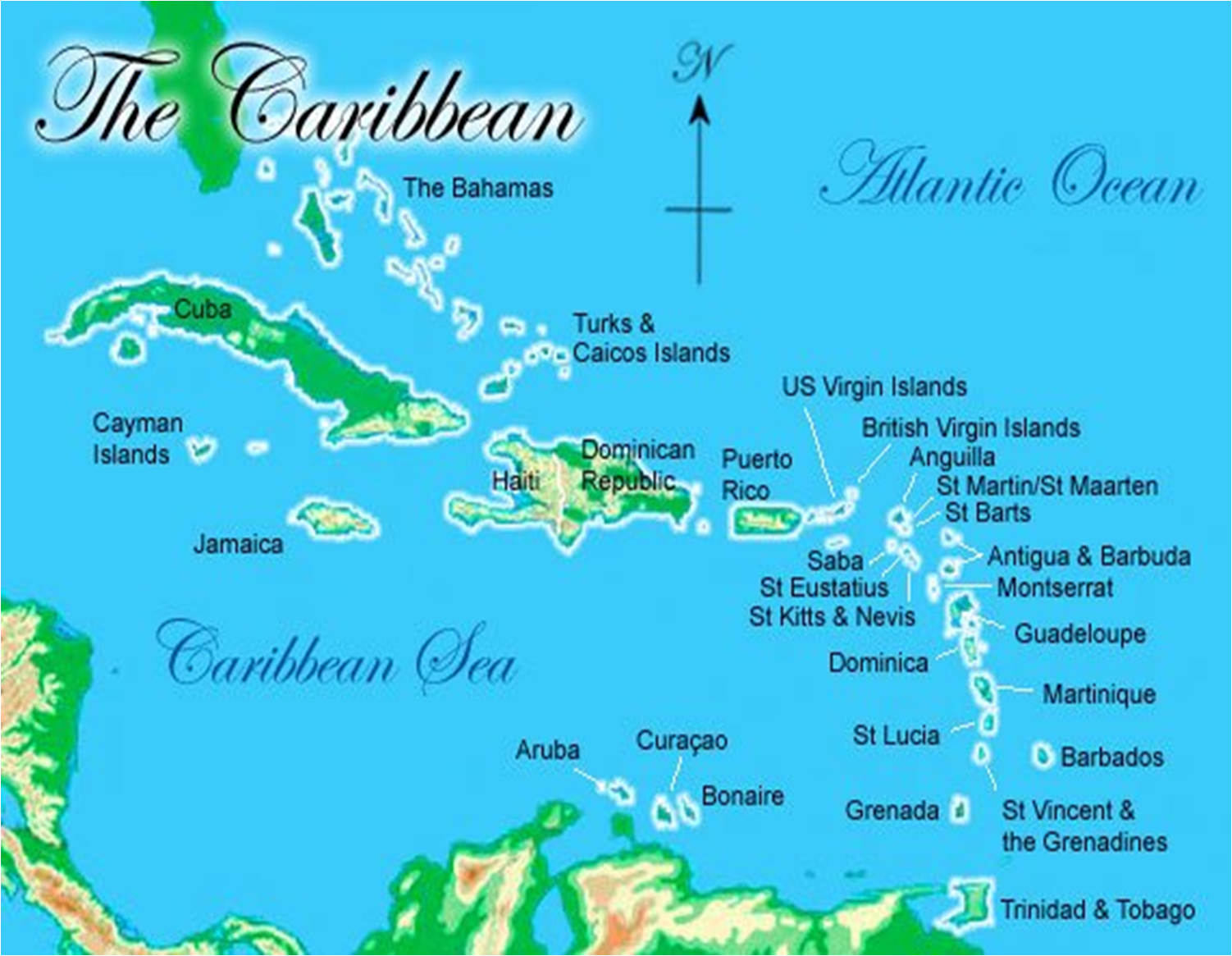
I think that we that come from the Caribbean need to remember that. If you look at our islands you can see all the diversity in the people just as much as Darwin saw in the species of his day. Each island has something a bit different that can teach us something  about ourselves. The Caribbean islands  are indeed an ideal laboratory for learning much about our world. Over the years there are many "species" that have come and made these islands home. English, French, Spanish and Dutch influences are all there. Along with the African presence from the slave trade, there is significant Indian and Chinese influence as well as a small indigenous Carib population. The mixing across the cultures has produced much that is unique.  It is not only the people that have made the difference, the diversity in the natural endowments of the islands is equally captivating. The flat terrain and famous beaches of Barbados and Antigua contrast with the mountainous rugged landscape of nearby St.Lucia,Dominica and Grenada. Resources of oil and gas predominate in Trinidad, whereas Jamaica is rich in bauxite and Guyana in gold and other minerals. The history of the region  unfortunately also shows differences in living  conditions with some of our countries being  among the highest in terms of  standards of living in the world but others such as Haiti languishing as one of the poorest.
For every  territory in the Caribbean there is a country in the world that is analogous to it in some way, I am convinced that a detailed study of our islands and the people could help us a lot in understanding the dynamics of culture, immigration, governance,economics and impact of natural resources in the same way that Darwin's discovery in 1831 taught us ultimately the basic mechanism of how humans came to be. Today one of the most pressing issues the world is facing is that of climate change. Islands being the territories likely to be most affected. Here is where a modern day  Darwin could be studying the  impacts on all of  our species and  the way that changes in climate are going to effect the social evolution of our community and the world.

The tragedy is that given the culture in the region  today I am not sure that we are going to find our Darwin. In order to make discoveries that can be world altering one needs to employ a systematic scientific approach. Observing the world, forming hypotheses based on the insights and trying to tie the different threads of ideas together to form coherent theories. Most importantly, there must be a willingness to follow evidence wherever it leads even if it means letting go of  beliefs that have traditionally been seen as the bedrock of our existence. This is where we keep falling down as a people in the region, because the cornerstone of faith is one rock you can never pick up to look underneath. 

We West Indians have undoubtedly had our successes in numerous fields. In the area of music and culture we have made our mark. Bob Marley stands out in the world today as an icon that has given reggae music world wide recognition. The ingenuity of the Trinidadian people has given us the steel-pan which was the only instrument invented in the 20th century.  Our Barbadian sensation Rihanna continues to astound us all by reeling off hit after hit on the Billboard charts.We have distinguished ourselves with authors such as  V.S Naipaul and   Derek Walcott both of  whom have been rewarded with Nobel Prizes. Our cricket may be struggling at the moment, but we can recall great names like Sir Garfield Sobers, Sir Vivian Richards, Gordon Greenidge, Brian Lara, the 3Ws, Clive Lloyd, Malcolm Marshall, Michael Holding and many many more.  Jamaican World Champion sprinter Usain Bolt is the latest in along line of great runners from that island which includes the likes of Merlene Ottey.We have doctors, lawyers, engineers and politicians that can rub shoulders with anybody else in the world. So lack of talent, education or creativity is not a problem for our people. You may therefore wonder  why I am so pessimistic about the region producing a scientist that can change the world.

The problem is that when it comes to critical thinking ,we fall down because we just can't disturb that rock of religion. We must  accept that God is the guiding hand in everything.  Once your worldview is governed by an individual who has ultimate authority; creativity and curiosity can only go back so far. I am not sure there is empirical evidence but I strongly believe that our resolute belief in God affects our approach in other areas of life. In my childhood the word that sticks out most in my mind is "obey." This started off with obedience to God illustrated by the attitudes of Abraham and Noah taught to us in Sunday School lessons before the age of  five. They both did exactly what God told them to do even though it went against common sense. Both were rewarded richly. For the disobedient ones like Adam and Eve or Ananias and Sapphira the outcome was  not so good. Once we had those concepts emphasised to us and the fear that went  along with it, we were told we needed to obey parents, priests and teachers in the same way. Often we felt the full consequences when we were deviant. It is not a coincidence that many Caribbean parents' favourite quote from the bible is, " Spare the rod, spoil the child."

When we grew older we were taught  we should always obey rules and the word " discipline" became another critical word in our vocabulary. We so often were told that the young people don't have discipline and that we should all be sent to boot camp to straighten us out. Of course the word discipline comes from "disciple" and that's what we were taught to be; faithful followers, just like one of the twelve.
In short it was as if the God in heaven came down  and manifested himself in these earthly authorities.

Up to today, whenever we have problems in the Caribbean we think the answer is to make laws more stringent. Last year  in Barbados students behavior at interschool sports began to deteriorate as they danced a bit too exuberantly for some. The answer from the government was to ban all musical instruments from the stadium. In the same year the prime minister himself stepped in to ban two artistes from coming to sing in the country because it was deemed that the message in their songs was not wholesome. "It was not exactly Sunday School material," was a comment I heard. An ironic statement if I ever heard one.This is typical of the type of responses we get to issues of bad  behaviour.  Banning things, more rules,  insisting that longer skirts or pants less baggy be worn, sending students home for incorrect footwear..At the end of everything,  all the ills in the country are blamed  on society turning away from God and children not going to Sunday School anymore. So it's more prayer, getting down on knees, pleading the blood, whatever. Anything other than actually teaching our young people how to reason.

People may think that  when we become adults we break out of this cycle. No,  it is similar when we start in the world of work. Many employees I have worked with in the Caribbean are at a complete loss unless the boss tells them exactly what he or she wants them to do and how to do it. There is often an expressed need for written rules . In fact it is quite regular to hear people speaking about some book that contains the main principles governing their work  as the "bible" of  the particular field they are in. There is generally a fear of ambiguity in situations and I have seen people almost paralysed  when they have been left to make a decision on their own. So, in most of the  islands we have policy document after policy document. A lady working in government on one of the islands told me once that you could  complete a construction project purely using  the card and paper the policies are written on. Yet, so often activities that are suppose to emerge from these guiding documents never get close to seeing the light of day.

Admittedly, in some areas of work the desire to operate from a  blueprint is not a bad thing. Many professionals work from blueprints. Builders work from the architects' drawings, engineers  rely on equations and formulae learnt at university, doctors similarly lean on what they have been taught in their anatomy classes or their own experience of how medicines work. However, few of the people in the Caribbean are actually involved in or even interested in working in an area where the goal is to generate new knowledge. We are the "downstream" professionals, very good at taking the crude product and refining it for the market but comparatively poor at searching for the new sources of oil. This is why it is so difficult for us to find a Darwin.  The skills of questioning, pulling back the curtain and digging  beyond the text book are just not there. They have been stunted from way back in Sunday School days. It is like a muscle that was never developed and now atrophy has set in.

This in my opinion, is the greatest harm of  living in a society steeped in religion. It's not the potential harm to   civilisation  through the slaughter of a witch, a parent opting for prayer instead of medicine, or the flying of a plane into a building. It is the lost opportunities for development that come directly from a paradigm that teaches us from very early not to question authority. Who knows how many great geneticists, evolutionary biologists or anthropologists in the Caribbean we could have had if not for the glass ceiling of religious belief. As a result,  I fear that we will have to wait for our Darwin to come from outside just as the first one came from England to make the discovery in those islands off Ecuador. I sincerely  hope that I am wrong.

Many Christians are, as we speak, looking for a second coming of Jesus in a few months time. I look forward to the second coming of  Darwin, one from among us that will bring an evolution in our way of thinking, enlightenment to the Caribbean and lead the region in showing the world the way.  I am sad to say that sometimes I wonder whether what I long for is any more plausible than what the rapture ready Christians expect to see in May.