
In looking at Charles Darwin's legacy, the journey appears to be as significant as the discovery. The way that the many pieces of evidence came together to form a fundamental theory governing all living organisms is truly fascinating. What caught my imagination today was Darwin's journey through the Galapagos Islands where he made his famous observation of the finches. We are told that Darwin was amazed at the diversity in the population of species that was present in such a small area, wondered how all these living creatures arrived where they were and how they adapted so well to their conditions. The year 1831 was a bit before my time but I can fully understand Darwin's awe. Islands are indeed intriguing places to visit and we can learn an incredible amount from studying them. In today's world so many people see islands as places to go to enjoy sun, sea and sand but I am sure it never dawns on any of them that it was in such an environment that the one of the greatest scientific insights ever was formulated.
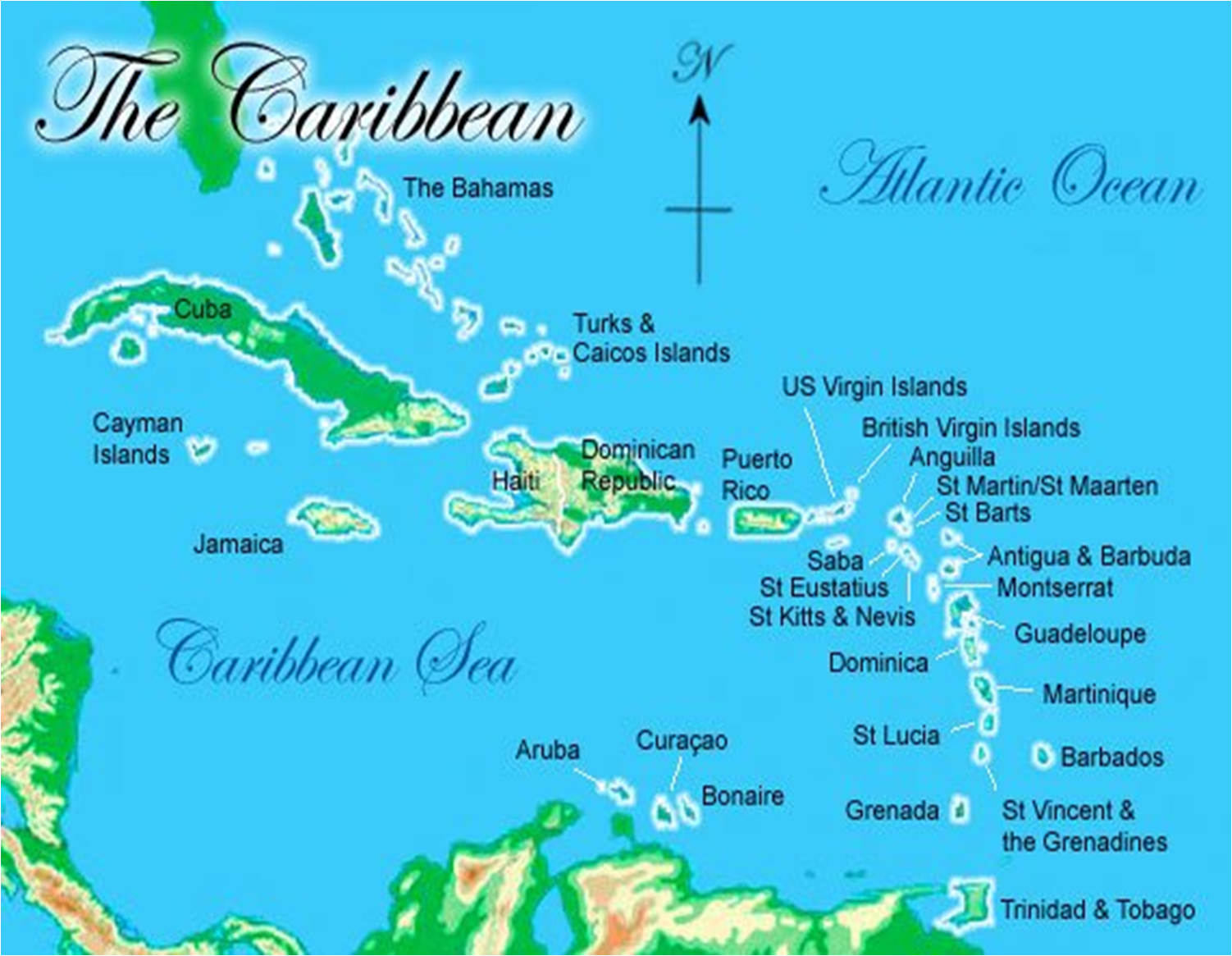 I think that we that come from the Caribbean need to remember that. If you look at our islands you can see all the diversity in the people just as much as Darwin saw in the species of his day. Each island has something a bit different that can teach us something about ourselves. The Caribbean islands are indeed an ideal laboratory for learning much about our world. Over the years there are many "species" that have come and made these islands home. English, French, Spanish and Dutch influences are all there. Along with the African presence from the slave trade, there is significant Indian and Chinese influence as well as a small indigenous Carib population. The mixing across the cultures has produced much that is unique. It is not only the people that have made the difference, the diversity in the natural endowments of the islands is equally captivating. The flat terrain and famous beaches of Barbados and Antigua contrast with the mountainous rugged landscape of nearby St.Lucia,Dominica and Grenada. Resources of oil and gas predominate in Trinidad, whereas Jamaica is rich in bauxite and Guyana in gold and other minerals. The history of the region unfortunately also shows differences in living conditions with some of our countries being among the highest in terms of standards of living in the world but others such as Haiti languishing as one of the poorest.
For every territory in the Caribbean there is a country in the world that is analogous to it in some way, I am convinced that a detailed study of our islands and the people could help us a lot in understanding the dynamics of culture, immigration, governance,economics and impact of natural resources in the same way that Darwin's discovery in 1831 taught us ultimately the basic mechanism of how humans came to be. Today one of the most pressing issues the world is facing is that of climate change. Islands being the territories likely to be most affected. Here is where a modern day Darwin could be studying the impacts on all of our species and the way that changes in climate are going to effect the social evolution of our community and the world.
The tragedy is that given the culture in the region today I am not sure that we are going to find our Darwin. In order to make discoveries that can be world altering one needs to employ a systematic scientific approach. Observing the world, forming hypotheses based on the insights and trying to tie the different threads of ideas together to form coherent theories. Most importantly, there must be a willingness to follow evidence wherever it leads even if it means letting go of beliefs that have traditionally been seen as the bedrock of our existence. This is where we keep falling down as a people in the region, because the cornerstone of faith is one rock you can never pick up to look underneath.
The tragedy is that given the culture in the region today I am not sure that we are going to find our Darwin. In order to make discoveries that can be world altering one needs to employ a systematic scientific approach. Observing the world, forming hypotheses based on the insights and trying to tie the different threads of ideas together to form coherent theories. Most importantly, there must be a willingness to follow evidence wherever it leads even if it means letting go of beliefs that have traditionally been seen as the bedrock of our existence. This is where we keep falling down as a people in the region, because the cornerstone of faith is one rock you can never pick up to look underneath.
We West Indians have undoubtedly had our successes in numerous fields. In the area of music and culture we have made our mark. Bob Marley stands out in the world today as an icon that has given reggae music world wide recognition. The ingenuity of the Trinidadian people has given us the steel-pan which was the only instrument invented in the 20th century. Our Barbadian sensation Rihanna continues to astound us all by reeling off hit after hit on the Billboard charts.We have distinguished ourselves with authors such as V.S Naipaul and Derek Walcott both of whom have been rewarded with Nobel Prizes. Our cricket may be struggling at the moment, but we can recall great names like Sir Garfield Sobers, Sir Vivian Richards, Gordon Greenidge, Brian Lara, the 3Ws, Clive Lloyd, Malcolm Marshall, Michael Holding and many many more. Jamaican World Champion sprinter Usain Bolt is the latest in along line of great runners from that island which includes the likes of Merlene Ottey.We have doctors, lawyers, engineers and politicians that can rub shoulders with anybody else in the world. So lack of talent, education or creativity is not a problem for our people. You may therefore wonder why I am so pessimistic about the region producing a scientist that can change the world.
The problem is that when it comes to critical thinking ,we fall down because we just can't disturb that rock of religion. We must accept that God is the guiding hand in everything. Once your worldview is governed by an individual who has ultimate authority; creativity and curiosity can only go back so far. I am not sure there is empirical evidence but I strongly believe that our resolute belief in God affects our approach in other areas of life. In my childhood the word that sticks out most in my mind is "obey." This started off with obedience to God illustrated by the attitudes of Abraham and Noah taught to us in Sunday School lessons before the age of five. They both did exactly what God told them to do even though it went against common sense. Both were rewarded richly. For the disobedient ones like Adam and Eve or Ananias and Sapphira the outcome was not so good. Once we had those concepts emphasised to us and the fear that went along with it, we were told we needed to obey parents, priests and teachers in the same way. Often we felt the full consequences when we were deviant. It is not a coincidence that many Caribbean parents' favourite quote from the bible is, " Spare the rod, spoil the child."
When we grew older we were taught we should always obey rules and the word " discipline" became another critical word in our vocabulary. We so often were told that the young people don't have discipline and that we should all be sent to boot camp to straighten us out. Of course the word discipline comes from "disciple" and that's what we were taught to be; faithful followers, just like one of the twelve.
In short it was as if the God in heaven came down and manifested himself in these earthly authorities.
In short it was as if the God in heaven came down and manifested himself in these earthly authorities.
Up to today, whenever we have problems in the Caribbean we think the answer is to make laws more stringent. Last year in Barbados students behavior at interschool sports began to deteriorate as they danced a bit too exuberantly for some. The answer from the government was to ban all musical instruments from the stadium. In the same year the prime minister himself stepped in to ban two artistes from coming to sing in the country because it was deemed that the message in their songs was not wholesome. "It was not exactly Sunday School material," was a comment I heard. An ironic statement if I ever heard one.This is typical of the type of responses we get to issues of bad behaviour. Banning things, more rules, insisting that longer skirts or pants less baggy be worn, sending students home for incorrect footwear..At the end of everything, all the ills in the country are blamed on society turning away from God and children not going to Sunday School anymore. So it's more prayer, getting down on knees, pleading the blood, whatever. Anything other than actually teaching our young people how to reason.
People may think that when we become adults we break out of this cycle. No, it is similar when we start in the world of work. Many employees I have worked with in the Caribbean are at a complete loss unless the boss tells them exactly what he or she wants them to do and how to do it. There is often an expressed need for written rules . In fact it is quite regular to hear people speaking about some book that contains the main principles governing their work as the "bible" of the particular field they are in. There is generally a fear of ambiguity in situations and I have seen people almost paralysed when they have been left to make a decision on their own. So, in most of the islands we have policy document after policy document. A lady working in government on one of the islands told me once that you could complete a construction project purely using the card and paper the policies are written on. Yet, so often activities that are suppose to emerge from these guiding documents never get close to seeing the light of day.
Admittedly, in some areas of work the desire to operate from a blueprint is not a bad thing. Many professionals work from blueprints. Builders work from the architects' drawings, engineers rely on equations and formulae learnt at university, doctors similarly lean on what they have been taught in their anatomy classes or their own experience of how medicines work. However, few of the people in the Caribbean are actually involved in or even interested in working in an area where the goal is to generate new knowledge. We are the "downstream" professionals, very good at taking the crude product and refining it for the market but comparatively poor at searching for the new sources of oil. This is why it is so difficult for us to find a Darwin. The skills of questioning, pulling back the curtain and digging beyond the text book are just not there. They have been stunted from way back in Sunday School days. It is like a muscle that was never developed and now atrophy has set in.
This in my opinion, is the greatest harm of living in a society steeped in religion. It's not the potential harm to civilisation through the slaughter of a witch, a parent opting for prayer instead of medicine, or the flying of a plane into a building. It is the lost opportunities for development that come directly from a paradigm that teaches us from very early not to question authority. Who knows how many great geneticists, evolutionary biologists or anthropologists in the Caribbean we could have had if not for the glass ceiling of religious belief. As a result, I fear that we will have to wait for our Darwin to come from outside just as the first one came from England to make the discovery in those islands off Ecuador. I sincerely hope that I am wrong.
Many Christians are, as we speak, looking for a second coming of Jesus in a few months time. I look forward to the second coming of Darwin, one from among us that will bring an evolution in our way of thinking, enlightenment to the Caribbean and lead the region in showing the world the way. I am sad to say that sometimes I wonder whether what I long for is any more plausible than what the rapture ready Christians expect to see in May.
